
The mysterious, illustrious robots (as Pharrell Williams endearingly describes the french duo) have finally released their hotly anticipated 4th album Random Access Memories, via Columbia. Come to think of it, ‘hotly anticipated’ is an understatement. 6 years of speculation, rumours, leaked snippets, SNL snippets, Coachella snippets, radio snippets, and succumbing to the very real possibility that Detox might even drop before this , have been quelled by Guy – Manuel and Thomas Bengalter’s most ambitious and eclectic effort yet. Ranging somewhere between 70’s disco to 80’s arena rock to new waves of dance-house, Random Access Memories doesn’t hold back in any regard. A colossal sound, backed by a list of collaborators that would make waves releasing music in their own right, strives to push the boundaries of electronic music, taking levels of sampling, instrumentation, and production to new heights.
Bangalter said in an interview last month that “Electronic music right now is in its comfort zone and it’s not moving one inch.” Random Access Memories certainly doesn’t sit idle in the twilight of stagnation. It’s a moving, driving, and at times emotive album. Here are our first impressions, track by track:
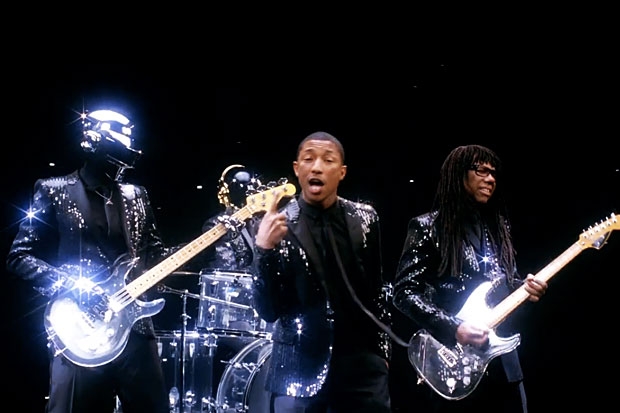
1. Give Life Back to Music (ft. Nile Rodgers & Paul Jackson Jr.) – 4.34
After a brief intro characterised by a chorus of rock ballad-esque guitars, a swaggering, upbeat rhythm overtakes the song. It’s driving, it’s disco; most importantly it’s fun. A nice melody eventuates, reminding us of a similar progression seen in Discovery song ‘Veridis Quo’. The lyrics are vocoded in the classic robo voice, singing “let music take your life/give life back to music.” Daft Punk’s passion is prevalent from the get go, however the song is a little guilty of fading out into oblivion, as the main hook is repeated ad nauseum.
2. The Game of Love – 5.21
The Game of Love starts out in a vague, almost astronomic fashion (sounds of french band Air are redolent here). Protracted, waining vocals pepper a boppy and slow dance beat, reflecting a strong lovelorn theme. Some interesting, and unpredicatable synth lead patterns break up the song. Despite its mysterious and almost ominous sound, the song continues on in a rather foreseeable way.
3 – Giorgio by Moroder (ft Giorgio Moroder) – 9.04
The all crucial third track of the album is a fascinating one. Italian disco legend Giorgio Moroder speaks freely about his experience in music, and namely his innovations with synthesisers in the 70s. Daft Punk fiercely take over though, and drop a dominant, oscillating synth line.The song builds slowly, and rather masterfully, even eventuating into a jazz jam roughly half way through. Giorgio drops back in to impart some wisdom about musical and creative liberty, at which the french dou (rather predicatabbly) instnatly change things up with some innovation of their own, and turn the song into a hollywood chase-esque epic with clattering symbals, shrieking strings, and a more developed synth pattern, that on its own is now starting to resemble one that would be in a video game soundtrack. Epic is the certainly the only word to describe this track.
4 – Within – 3.48
At first I had to check my itunes library hadn’t gone on shuffle to play Claude Debussy or Maurice Ravel, the opening moments of Within are that surprising. A whimsical piano progression captivates you, taking you momentarily back to romanticist Europe. A robo vocoded voice takes you back to the 21st century though, continuing the previously established theme of’ love, and “looking for someone.” A very bold effort from Daft Punk, but the track looses its way by the end of it ,as the idea becomes hackneyed.
5 – Instant Crush’ (ft. Julian Casablancas) – 5.37
An 80’s slow dance looks to be on the cards with Julian Casablancas for the first time in his musical discography, being slightly inaudible? However one of the strongest chorus’ seen in a while from Daft Punk emphatically break up the song, and add a whole new dimension. The subdued, faded synth line in the background is a very nice, subtle addition, despite being overcrowded by the rather corny palm muted guitar. Speaking of guitars, there is some dexterous solo work throughout. A classic disco-house track that should be flooding radio stations soon.
6 – Lose Yourself to Dance (ft. Pharrell Williams) – 5.53
A crunching beat, along with slamming guitars opens this one up, backed by Pharrel’s soulful voice, who continues to demonstare his melodic and vocal ability. The hook line ‘Lose yourself to dance’, surprisingly remains fresh all throughout, with the ‘robots’ coming in again once more to provide the backing vocals. It’s clear, only six tracks in, Daft Punk have been doing their guitar homework (no double entendre intended). Another strong performance on that front here.
7 – Touch (ft. Paul Williams) – 8.18
Another ambitious song treading close to the 10 minute mark begins in a dark fashion, with atmospheric sounds building as if a spaceship were to launch. This cuts beautifully just before the 2 minute mark, leaving it down to Paul Williams’ bravado. He delivers, as do Daft Punk, when they deliver one of the most novel moments on the album, dropping a gleeful beat of shimmering xylophones bopping jazz piano, and some daring brass instrumentation. Dynamically the song works masterfully dropping in and out of sections, leaving you with a sense of thorough intrigue; this song could’ve gone anywhere – and they took it to a good place. It leaves you wanting to nibble candycanes in a sunflower valley galloping arm-locked with the cast of The Wizard of Oz. A thoroughly enjoyable track.
8 – Get lucky (ft Pharrell Williams) – 6.07
The radio friendly lead single that has been the face of this album ever since that SNL snippet was revealed is up next. The album version is much more progressive than the radio edit, and sees the vocoder backing come in much later; a nice touch. It also leaves room for a fitting outro. A much more complete and cohesive (as expected) version of the single. All in all, a disco hopping song that will be played in the clubs for years to come.
9 – Beyond – 4.50
Starting boldly with movie soundtrack-esque strings, the song develops into a slow dance ballad. Some simple, but effective drumming is the key here, keeping the song moving, but not beyond reach. The vocoded robot voice, as much as it is a staple – better yet trademark – of Daft Punk, becomes slightly monotonous. Some nice synths, very similar to “The Game of Love’ fade the song out. Nothing hugely memorable here.
10 – Motherboard – 5.41
The first instrumental of the LP continues in the rearcurring theme of vague, atmospheric and mysterious sounds. The french duo display their knack of writing such songs however, never providing a dull moment. The song is broken up suddenly with a gargantuan wall of vacum like sounds, which makes the re-introduction of the theme that whole lot sweeter. Some beefty drums too are a nice touch that are seldom seen in their discography.
11 – Fragments of time (ft. Todd Edwards) – 4.39
Todd Edwards’ vocals refreshes things a bit as the album starts to draw to a close. A jumpy and fun, yet subtle chorus, typified by some synth work moving up and down a scale, is a strong moment. It’s a chill wave, slow dance song with something a little different. The lyricism is a noticeable step up to certain other collaborators as well. Refreshing indeed.
12 – Doin’ it right (ft. Panda Bear) – 4.12
Seeing Animal Collective’s Noah Lennox (Panda Bear) as one of the collaborators was perhaps the most surprising on the list. Daft Punk lay down the vocal sample “doin’ it right” from the start of the song, and it drives the song forward well. Panda Bear’s distinct vocals juxtapose well for an interesting blend. The idea doesn’t move much beyond this however.
13 – Contact – 6.21
A grand finale, to a grand album. Space like transmission samples with thick synth patches preserve the astronomic theme. A complex, meaty drum truck surprises, providing a very epic and arena like sound. A huge climax at the end of the song ensues, leaving your ears with some repairing to do. A befitting manner in which to end Random Access Memories
No matter what way you approach it, it is undeniable that Daft Punk never rest on their laurels. They changed the game with Homework and Discovery, and have left a stamp on a generation ever since. Random Access Memories doesn’t fall short in ambition, proficiency, or execution. Pharrell Williams described them as being ‘robots from another planet.’ Sometimes however, it seems just that: a wonderfully crafted album that shines more often than not, but is simply a victim of its own ambition and accessibility.
 Juicer Music